Interior signage programs integrate dimensional lettering, reception signage, suite identification, and architectural brand elements within a structured framework. These systems extend brand identity into the built environment, reinforcing professionalism and visual consistency at key touchpoints throughout a property.
Unlike wayfinding systems, interior branding focuses on visual presence, material quality, and spatial integration, enhancing perception while supporting organizational identity.
Interior signage and lobby branding systems must align with architectural finishes, spatial hierarchy, and corporate standards. Each installation is developed with consideration for material selection, mounting methods, and long-term durability within active commercial environments.
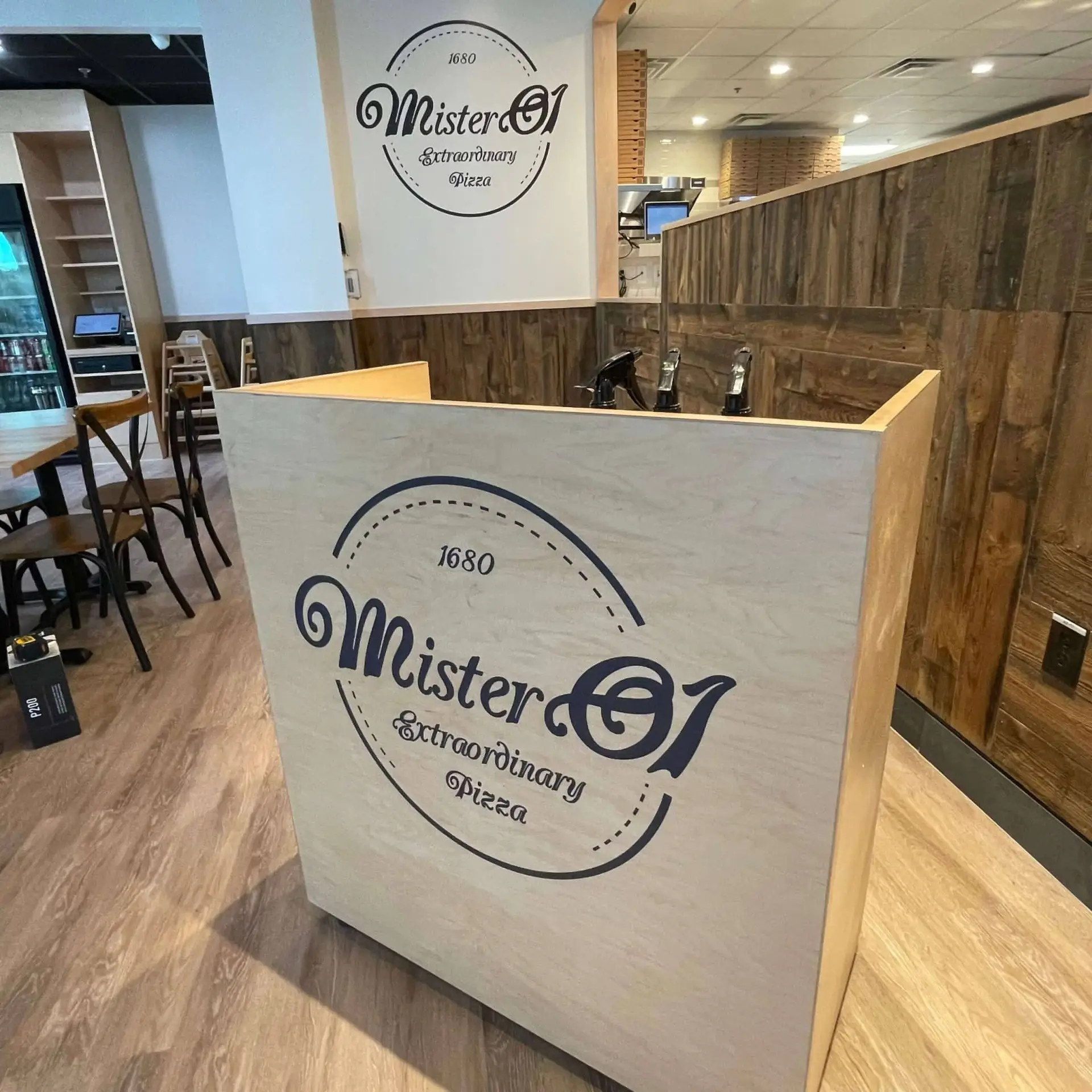
Dimensional logo installations and interior branding systems designed to reinforce corporate identity within reception areas, executive spaces, and collaborative environments.
Consistent interior signage systems structured to maintain visual continuity across evolving tenant spaces and shared common areas.
Interior branding programs implemented within medical and professional environments where clarity, durability, and finish quality are critical.
Architectural brand elements integrated into interior finishes to elevate first impressions while maintaining durability in high-traffic settings.
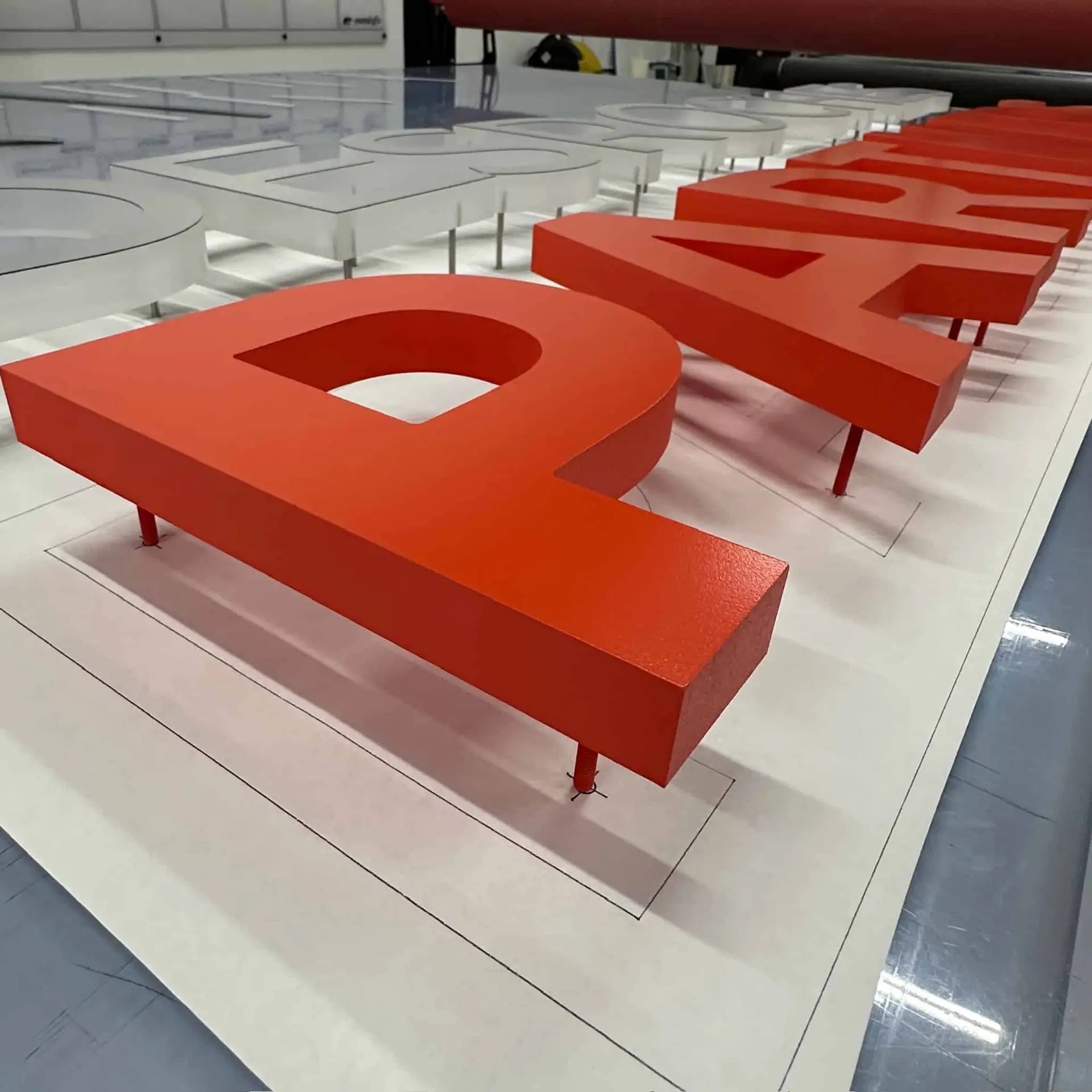
Interior signage systems are defined by material selection, finish quality, and fabrication precision. Each installation is produced with attention to depth, mounting method, and alignment within the surrounding architectural context.
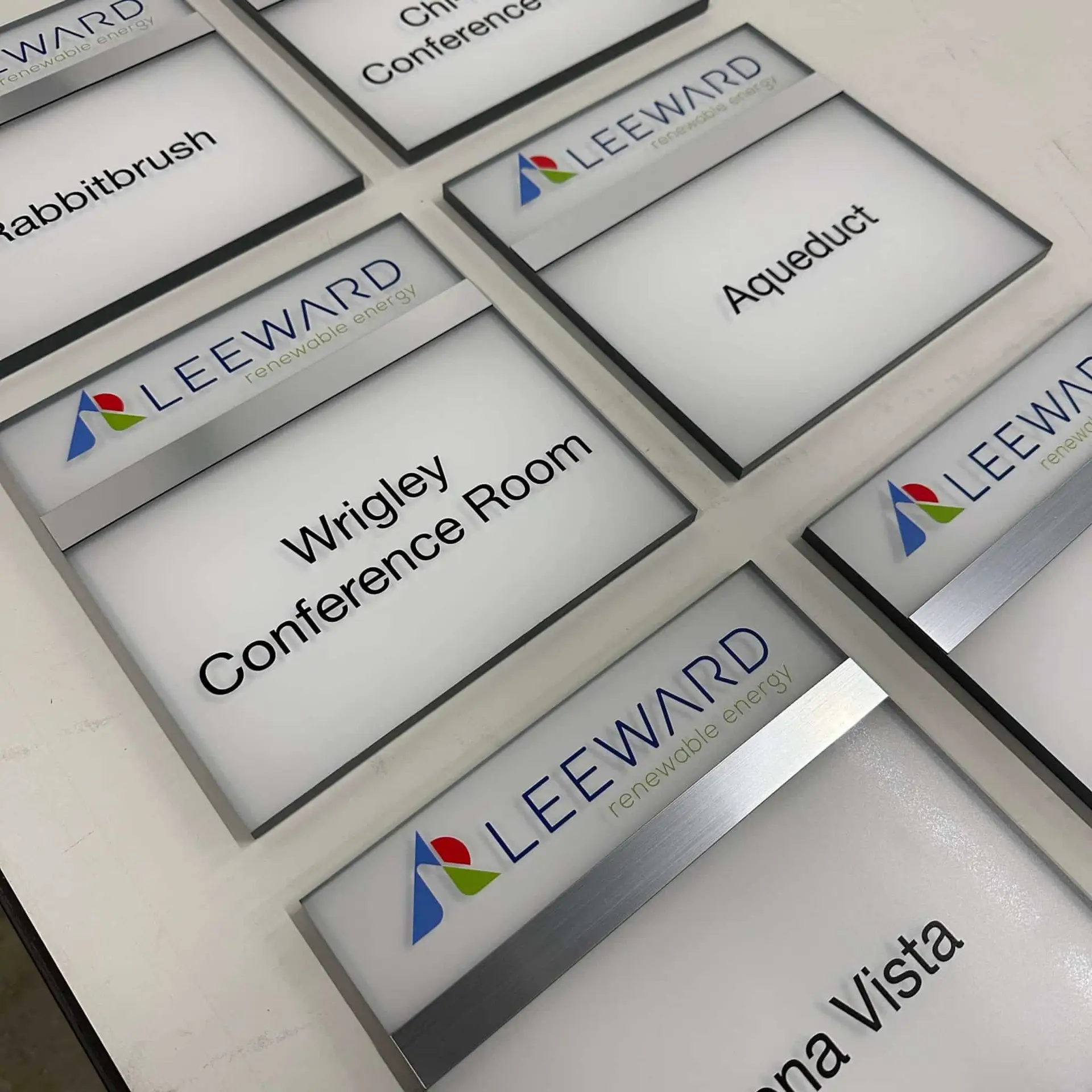
Precision-cut acrylic and layered composite materials fabricated to maintain typographic accuracy, edge clarity, and consistent finish across branded environments.
Wayfinding signage must be installed at defined mounting heights and locations to ensure accessibility and consistency across commercial environments. Improper placement can compromise both usability and compliance.
Character contrast, typography selection, and finish choices play a significant role in readability. Commercial wayfinding systems are designed with visibility and clarity in mind, particularly within healthcare, educational, and multi-tenant properties.
ADA-compliant signage should not function as an afterthought. Effective wayfinding systems integrate regulatory signage seamlessly within the broader navigation framework to maintain both legal standards and cohesive design.
Interior signage systems are defined by material selection, finish quality, and fabrication precision. Each installation is produced with attention to depth, mounting method, and alignment within the surrounding architectural context.
Precision-cut acrylic and layered composite materials fabricated to maintain typographic accuracy, edge clarity, and consistent finish across branded environments.
Dimensional signage systems mounted using stud, flush, or standoff methods to create controlled depth and architectural presence.
Fabricated metal components and brushed finishes used to introduce durability and refinement within corporate interiors.
Color-matched and custom-finished elements aligned with brand standards and interior design specifications to ensure cohesive visual integration.
Interior branding installations require precision, coordination, and attention to finish quality. Reveal GFX approaches each project with structured communication and fabrication standards aligned with commercial expectations.
Dimensional signage systems demand accuracy in typographic scaling, edge finishing, and mounting placement. We maintain controlled production processes to ensure brand elements are fabricated and installed as specified.
Interior signage must reflect corporate brand standards accurately. Our calibrated production methods support consistent color matching across materials and layered applications.
Lobby and interior signage installations occur within finished environments. Our team installs with care, coordinating placement and mounting to protect surrounding surfaces and maintain professional presentation.
Clear timelines, proactive communication, and structured updates help architects, contractors, and property teams move projects forward efficiently.
Interior signage and lobby branding systems are best evaluated through real-world application. The following projects highlight dimensional logo installations and coordinated interior branding programs delivered across commercial environments.
Executed a campus-wide interior signage rebrand across eight active hospital buildings, ranging from seven to eight floors. Fabricated dimensional lobby signage, ADA-compliant room identification systems, and coordinated interior brand elements aligned with updated healthcare standards — all implemented within fully operational clinical environments.
Scope: Large-format wall murals | Textured wall applications | Lobby branding | Dimensional
elements
Scale: 75,000+ sq ft to date | Multi-state rollout | Ongoing deployment
Fabricated dimensional lettering, acrylic standoff signage, award plaques, and branded interior identity systems across multiple U.S. warehouse facilities over a two-year phased rollout. Strict color proofing, structured labeling, and coordinated multi-site freight delivery ensured consistent brand execution across distributed industrial environments.
Scope: Large-format wall murals | Vinyl wall graphics | Interior branded environments
Scale: 6,000+ sq ft | 50+ applications | Multi-floor campus
Produced dimensional lobby logo signage, blade signs, room identification systems, and interior brand elements across a multi-floor campus environment. Fabrication was aligned with architectural specifications and packaged for coordinated out-of-state installation under accelerated timelines.
Lobby logo signage is typically fabricated from acrylic, aluminum, brushed metal, layered composites, and custom-finished materials. Material selection is based on brand standards, interior finishes, mounting conditions, and desired dimensional depth.
Yes. Interior signage systems are frequently updated during rebranding initiatives or tenant turnover. Existing signage can be replaced or refinished to align with new brand standards while maintaining architectural integrity within the space.
Yes. Interior signage installations are often completed within finished and operational environments. Installations are coordinated to protect surrounding finishes and minimize disruption to daily operations.
Project timelines vary depending on material selection, fabrication complexity, and installation conditions. Most commercial interior signage programs require coordinated production and scheduled installation aligned with construction or renovation timelines.
Interior signage and lobby branding systems require precision fabrication, material alignment, and coordinated installation within finished commercial environments. Reveal GFX partners with architects, contractors, and property teams to deliver structured interior signage programs aligned with brand standards and project timelines.
Reveal GFX delivers commercial wayfinding, interior signage, and environmental graphics for projects throughout Dallas – Fort Worth. Our Dallas consultation office supports planning and coordination, while our Richardson production facility manages fabrication and quality control in-house, ensuring structural, end-to-end project execution.