
ADA-compliant signage is designed to meet accessibility standards established under the Americans with Disabilities Act. These standards regulate tactile characters, braille placement, mounting height, character contrast, and sign positioning within public and commercial environments.
ADA signage is typically required for:
Compliance ensures that building occupants, including individuals with visual impairments, can navigate spaces independently and safely.
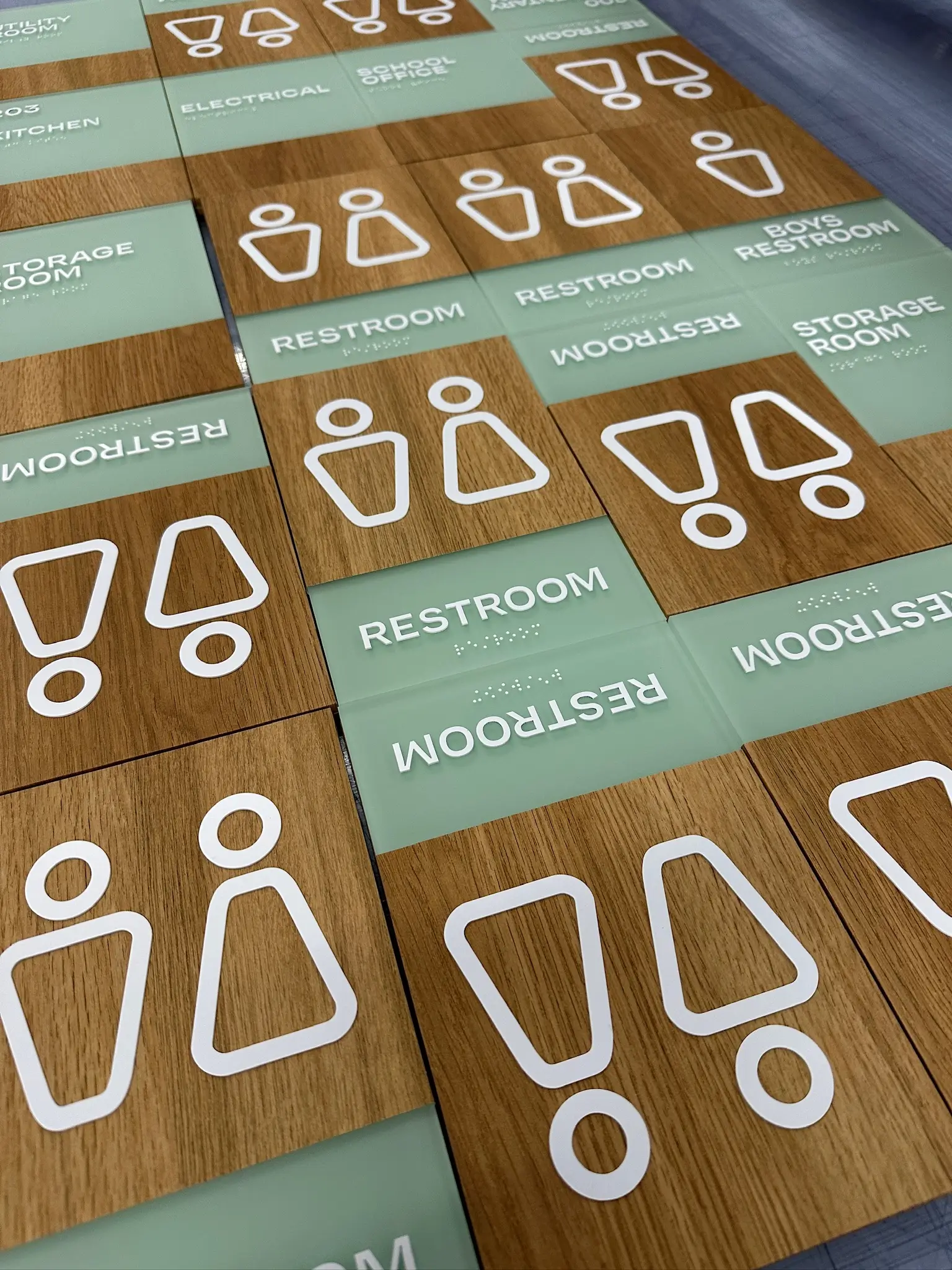
ADA-compliant signs must incorporate raised tactile characters and Grade 2 braille elements that meet specific dimensional and placement standards. Reveal GFX fabricates tactile signage components in-house to ensure alignment with project specifications and accessibility requirements.
Fabrication capabilities include:
In-house production supports consistent typography, material selection, and coordinated deployment across larger wayfinding systems.
ADA signage must meet detailed requirements related to mounting height, character spacing, braille placement, and contrast ratios. While compliance standards vary based on occupancy and jurisdiction, signage programs are evaluated according to applicable accessibility codes and project specifications.
Reveal GFX supports compliance-driven projects through structured fabrication processes and
coordination with contractors and facility stakeholders to ensure proper placement and
alignment within commercial environments.
Raised characters and braille elements are fabricated in-house to maintain control over compliance specifications and material standards.
Signage programs are developed with awareness of accessibility guidelines governing tactile elements, mounting requirements, and contrast standards.
ADA signage is coordinated with directional, directory, and multi-floor navigation programs to maintain cohesive design across properties.
Experience supporting compliance-driven environments where accessibility and regulatory alignment are essential.
ADA-compliant signage must meet specific standards related to raised tactile characters, braille placement, character height, spacing, contrast, and mounting location. These requirements are established under the Americans with Disabilities Act and applicable building codes to ensure accessibility for individuals with visual impairments.
ADA-compliant signage is typically required for permanent room identification, restrooms, stairwells, exit doors, and accessible route indicators within commercial and public buildings. Requirements vary depending on occupancy type and local building codes.
Yes. Permanent room identification signage generally requires Grade 2 braille positioned directly below raised tactile characters. Braille must meet specific sizing and spacing standards to comply with accessibility guidelines.
Yes. ADA-compliant signs must be installed at specific mounting heights and locations to ensure accessibility. Placement standards regulate the vertical position of tactile elements and the proximity to door frames or entry points.
Yes. Reveal GFX fabricates tactile and braille signage components in-house and installs ADA-compliant signage systems across commercial, healthcare, educational, and institutional environments.
ADA signage requires precise fabrication and accurate installation to meet accessibility standards. Reveal GFX produces and installs ADA-compliant tactile signage systems for corporate offices, healthcare facilities, educational campuses, and institutional properties
throughout Dallas-Fort Worth and nationwide.
Contact our team to review compliance requirements, material options, and coordinated
deployment for your next commercial project.
Reveal GFX delivers commercial wayfinding, interior signage, and environmental graphics for projects throughout Dallas – Fort Worth. Our Dallas consultation office supports planning and coordination, while our Richardson production facility manages fabrication and quality control in-house, ensuring structural, end-to-end project execution.