
Directional signage guides occupants through corridors, departments, suites, and shared commercial environments. Effective systems rely on consistent typography, hierarchy, and placement to ensure intuitive navigation across multi-floor buildings.
Common directional components include:
Programs are structured to align with architectural finishes while maintaining legibility within high-traffic interior spaces.
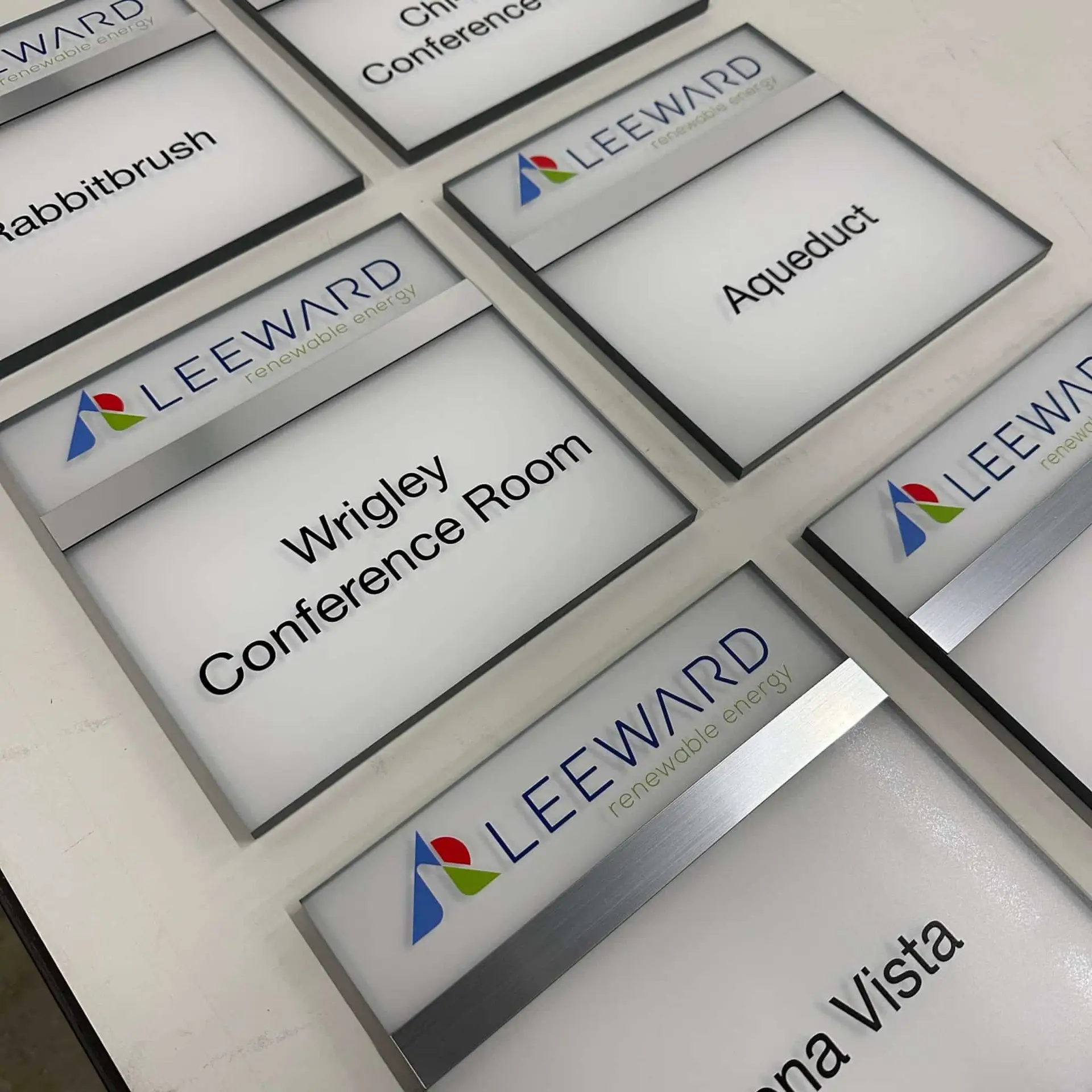
Room identification signage provides clear labeling for offices, classrooms, patient rooms, conference spaces, and shared facilities. These systems are designed to maintain consistency across interior environments while supporting compliance standards where required.
Applications commonly include:
Sign systems are fabricated to support durability, clean presentation, and architectural alignment within commercial interiors.
Production oversight ensures consistent typography, material alignment, and scalable output across multi-floor environments.
Experience supporting code-aligned signage systems across healthcare, corporate, and institutional environments.
Structured signage systems deployed across large commercial interiors and multi-building properties.
Alignment with contractors, property managers, and facility teams to support organized installation sequencing.
Directional signage guides occupants through corridors, departments, and shared spaces within a building. These signs provide navigational cues that support movement between areas.
Room identification signage labels specific rooms, offices, classrooms, or patient spaces. While directional signs guide users to a location, room identification signs confirm arrival and provide clear space designation.
In many commercial and public environments, certain room identification signs are required to meet ADA standards. This typically includes tactile characters, braille, mounting height requirements, and specific contrast guidelines.
Compliance requirements vary depending on the space and occupancy type. Signage programs are evaluated based on project specifications and applicable codes.
Yes. Many commercial environments utilize modular or changeable insert systems to accommodate tenant turnover, department reorganization, or room reassignment. These systems allow updates without full sign replacement while maintaining visual consistency across the interior environment.
Yes. Reveal GFX fabricates ADA-ready tactile signage components in-house, including raised characters and braille elements. In-house production supports consistent material alignment and coordinated deployment within larger wayfinding programs.
Reveal GFX fabricates structured directional and room identification systems for corporate, healthcare, and institutional environments throughout Dallas–Fort Worth and nationwide
Reveal GFX delivers commercial wayfinding, interior signage, and environmental graphics for projects throughout Dallas – Fort Worth. Our Dallas consultation office supports planning and coordination, while our Richardson production facility manages fabrication and quality control in-house, ensuring structural, end-to-end project execution.