A commercial wayfinding system is a coordinated signage program designed to guide users clearly and efficiently through a built environment. These systems integrate directional signage, room identification, building directories, and regulatory elements into a unified framework.
Rather than isolated signs, structured wayfinding programs consider spatial hierarchy, traffic flow, ADA requirements, and multi-floor navigation to create clarity across complex commercial properties.
Well-designed wayfinding systems reduce confusion, improve user experience, and support operational efficiency within corporate and institutional environments.
A comprehensive wayfinding system integrates multiple signage types within a unified visual and functional structure. Each component works together to create clarity, consistency, and compliance across commercial environments.
Wayfinding systems must adapt to the operational demands, traffic patterns, and structural
complexity of each property. Reveal GFX designs coordinated navigation systems aligned with
architectural layouts, tenant configurations, and regulatory standards.
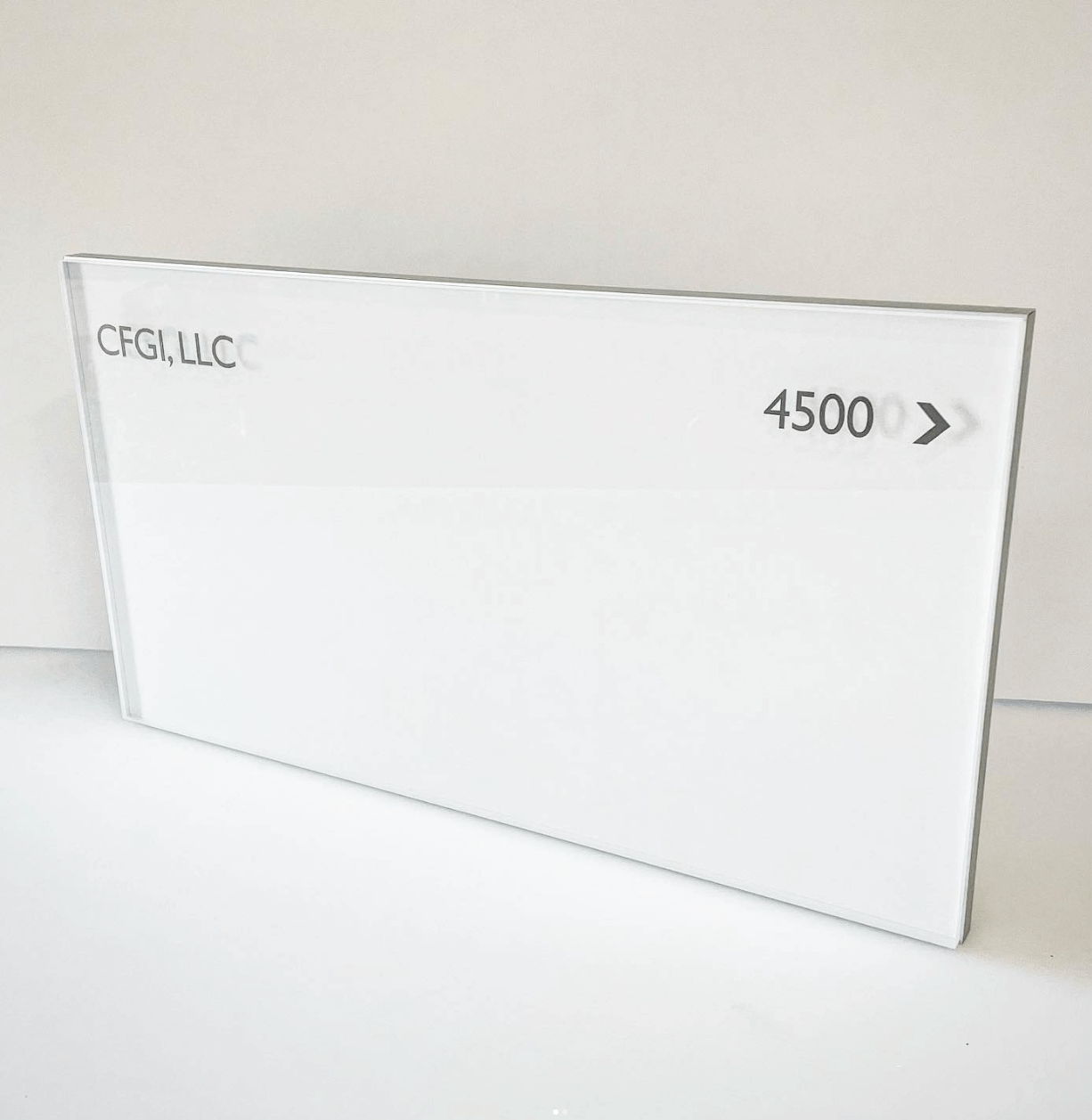
Integrated directory systems, suite identification, and directional signage programs structured to support tenant turnover and multi-floor navigation within complex commercial properties.
Clear, compliant navigation systems are designed to reduce confusion within hospitals and medical facilities, where accessibility and clarity are critical to patient experience.
Multi-building and multi-floor wayfinding systems engineered to maintain consistent branding and intuitive navigation across expansive properties.
Structured signage systems that guide students, faculty, and visitors through academic buildings, athletic facilities, and administrative spaces.
Large-scale vehicular and pedestrian wayfinding systems designed for high-traffic environments, emphasizing visibility, durability, and clear directional hierarchy.
Commercial wayfinding systems must meet federal, state, and local accessibility standards. Proper integration of ADA-compliant signage ensures that navigation systems support inclusivity while aligning with regulatory requirements.
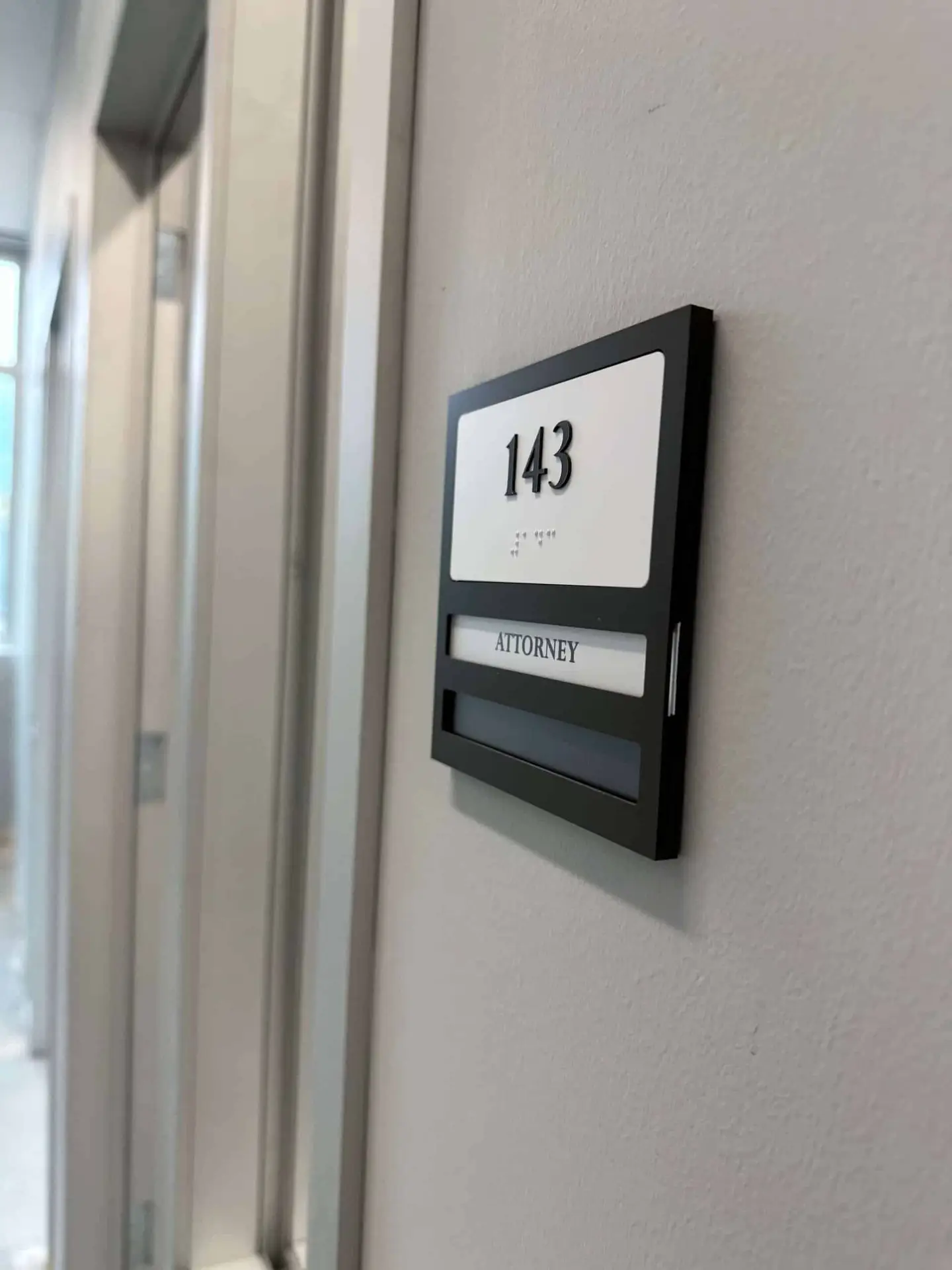
Wayfinding programs often incorporate tactile room identification signs, braille, and mounting height specifications, character contrast standards, and clear placement guidelines to meet compliance criteria.
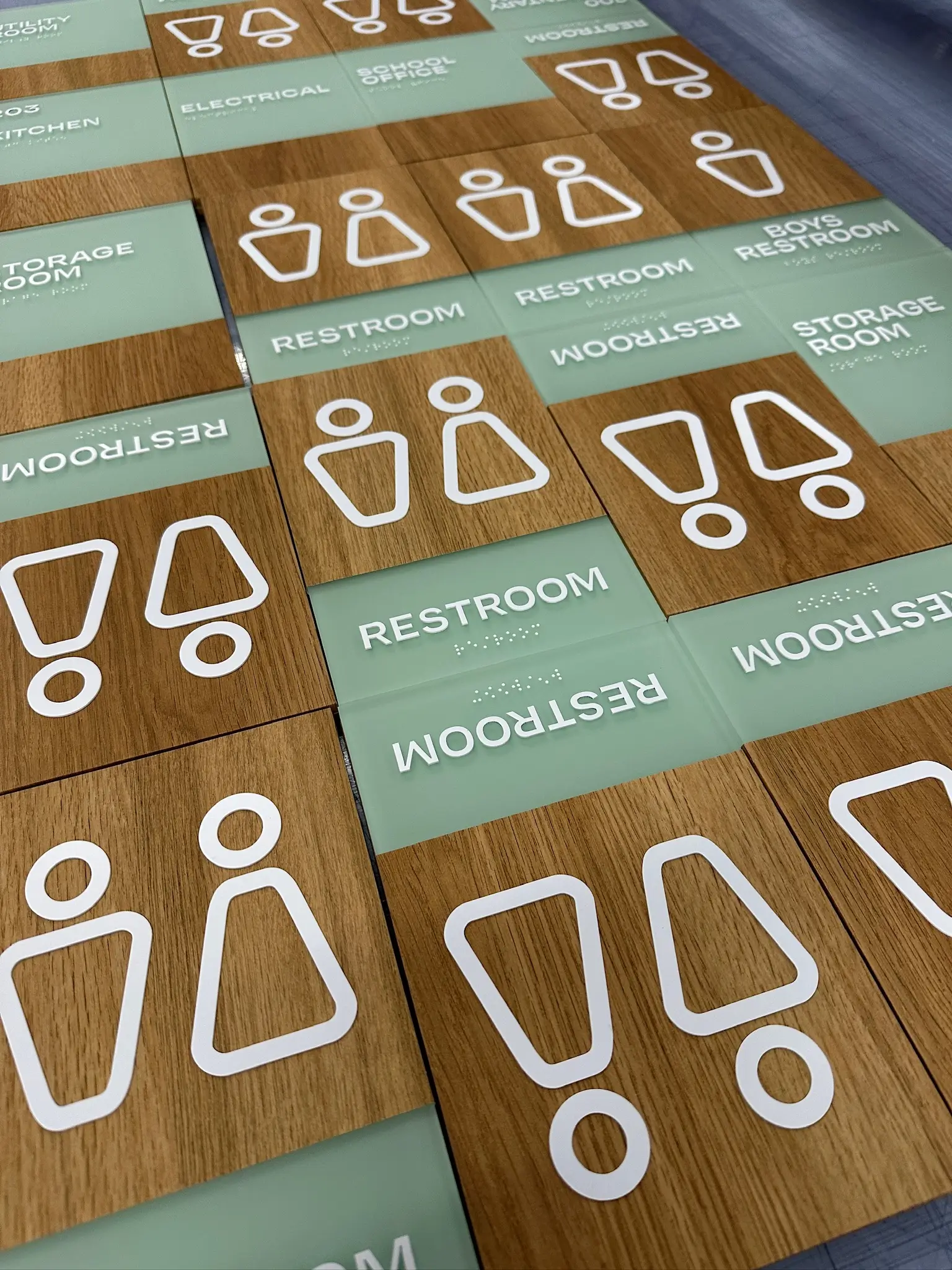
Room identification and regulatory signage must include raised characters and braille that meet established ADA guidelines. Proper fabrication and placement are critical to ensuring long-term compliance.
Wayfinding signage must be installed at defined mounting heights and locations to ensure accessibility and consistency across commercial environments. Improper placement can compromise both usability and compliance.
Character contrast, typography selection, and finish choices play a significant role in readability. Commercial wayfinding systems are designed with visibility and clarity in mind, particularly within healthcare, educational, and multi-tenant properties.
ADA-compliant signage should not function as an afterthought. Effective wayfinding systems integrate regulatory signage seamlessly within the broader navigation framework to maintain both legal standards and cohesive design.
Wayfinding systems require precise fabrication and coordinated installation to maintain alignment across multiple sign types, floors, and environments. Reveal GFX produces commercial-grade signage components designed for durability, consistency, and long-term performance.
Our team manages production workflows and installation sequencing to ensure signage
Systems are implemented accurately within active commercial environments.
Wayfinding signage is fabricated using durable substrates, dimensional lettering systems, metal components, and high-performance finishes suited for interior and exterior commercial applications.
Wayfinding installations are often completed alongside tenant improvements, construction phases, or operational buildings. We coordinate closely with contractors and property management teams to align timelines and minimize disruption.
A coordinated wayfinding program depends on consistent typography, material finishes, mounting methods, and placement standards. We maintain structured production controls to ensure uniformity across all components of the system.
Commercial wayfinding systems must withstand daily traffic, environmental exposure, and tenant turnover. Material selection and installation methods are structured to support longevity and maintain clarity over time.
Wayfinding systems demand coordination across multiple sign types, regulatory requirements, and installation phases. Reveal GFX approaches each project with structured communication and system-level alignment to ensure clarity from fabrication through final installation.
We manage wayfinding programs as integrated systems rather than isolated signs, aligning directional, identification, and directory components within a unified framework.
Our team understands the importance of ADA integration, mounting standards, and legibility requirements within commercial environments, ensuring regulatory elements are incorporated accurately and consistently
Wayfinding systems are best evaluated through real-world implementation. The following projects highlight coordinated directional, identification, and ADA-compliant signage programs delivered within complex commercial and healthcare environments across Dallas.
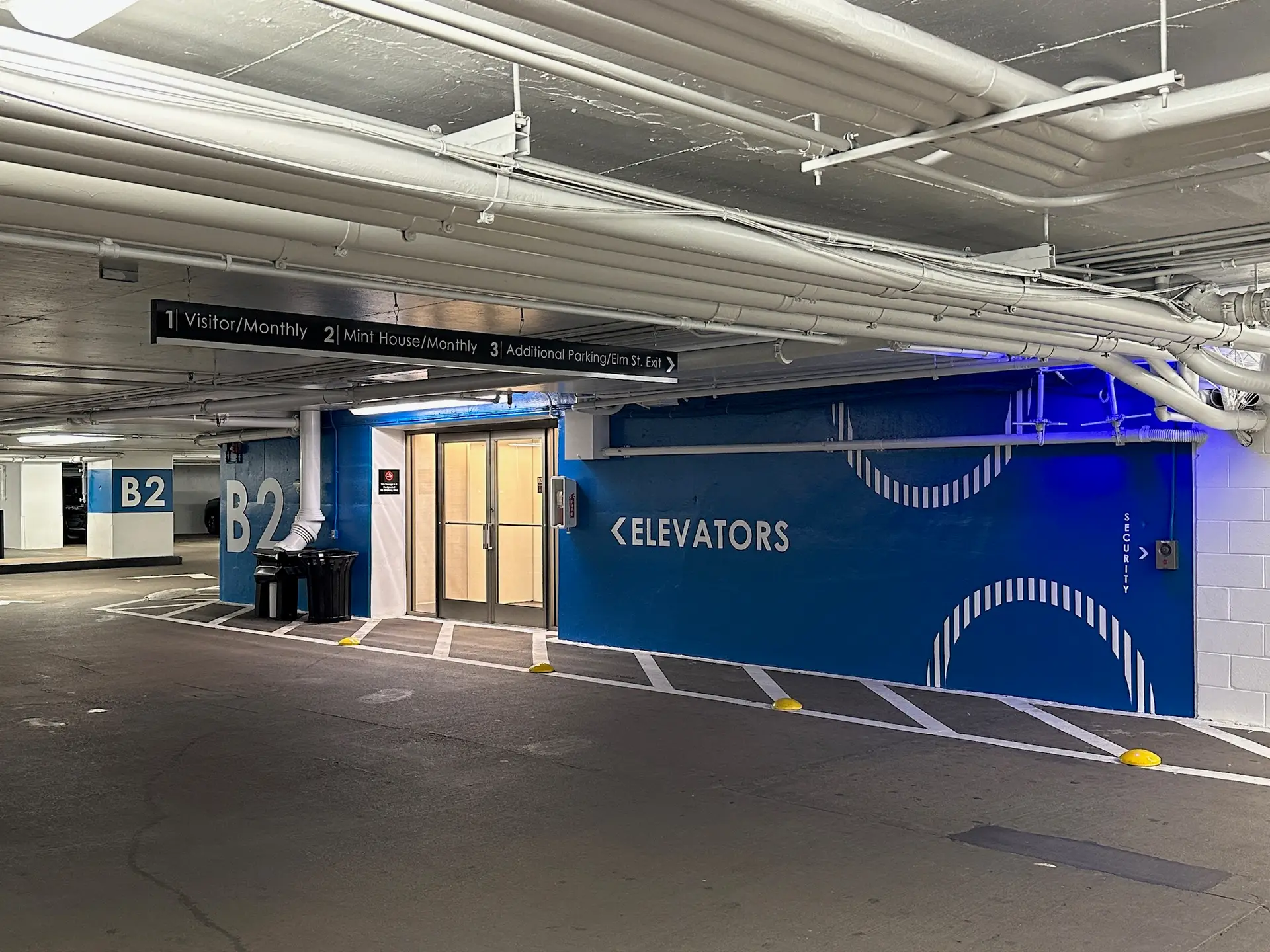
Designed and installed a coordinated parking garage wayfinding system within a 50-story commercial tower. The program integrated multi-level directional signage, vehicular navigation elements, and identification components to support clear movement throughout an active, high-traffic environment.
Produced and installed over 200 wayfinding and ADA-compliant signage components across two multi-floor hospital buildings as part of an active expansion project. The coordinated program included directional signage, building directories, room identification, and regulatory elements aligned with healthcare compliance standards. Installation was completed within a live medical environment in partnership with Brasfield & Gorrie.
Executed a coordinated wayfinding system rebrand across eight active hospital buildings, ranging from seven to eight floors. The program included directional signage, room identification systems, building directories, and ADA-compliant tactile components deployed within fully operational clinical environments. Installation was phased to maintain uninterrupted patient flow while ensuring campus-wide navigation consistency.
A commercial wayfinding system typically includes directional signage, room identification signs, building directories, multi-floor navigation elements, and ADA-compliant signage. These components work together within a coordinated framework to support clear navigation throughout complex environments.
Yes. Wayfinding systems in commercial properties must comply with ADA guidelines, including tactile characters, braille, mounting height standards, and contrast requirements. Proper integration ensures accessibility while maintaining visual consistency across the property.
Timelines vary depending on building size, number of signs, and installation conditions. Multi-floor and multi-building properties require coordinated production and phased installation, particularly within active healthcare or commercial environments.
Yes. Wayfinding systems are often updated during tenant turnover, corporate rebranding, or building expansions. Coordinated replacement ensures new signage integrates seamlessly with existing architectural and regulatory standards.
Effective wayfinding systems require coordination across directional signage, identification components, and compliance standards. Reveal GFX partners with architects, contractors, and property teams to deliver structured navigation programs aligned with project timelines and regulatory requirements.
Contact our team to review your building layout, scope, and implementation schedule.
Reveal GFX delivers commercial wayfinding, interior signage, and environmental graphics for projects throughout Dallas – Fort Worth. Our Dallas consultation office supports planning and coordination, while our Richardson production facility manages fabrication and quality control in-house, ensuring structural, end-to-end project execution.